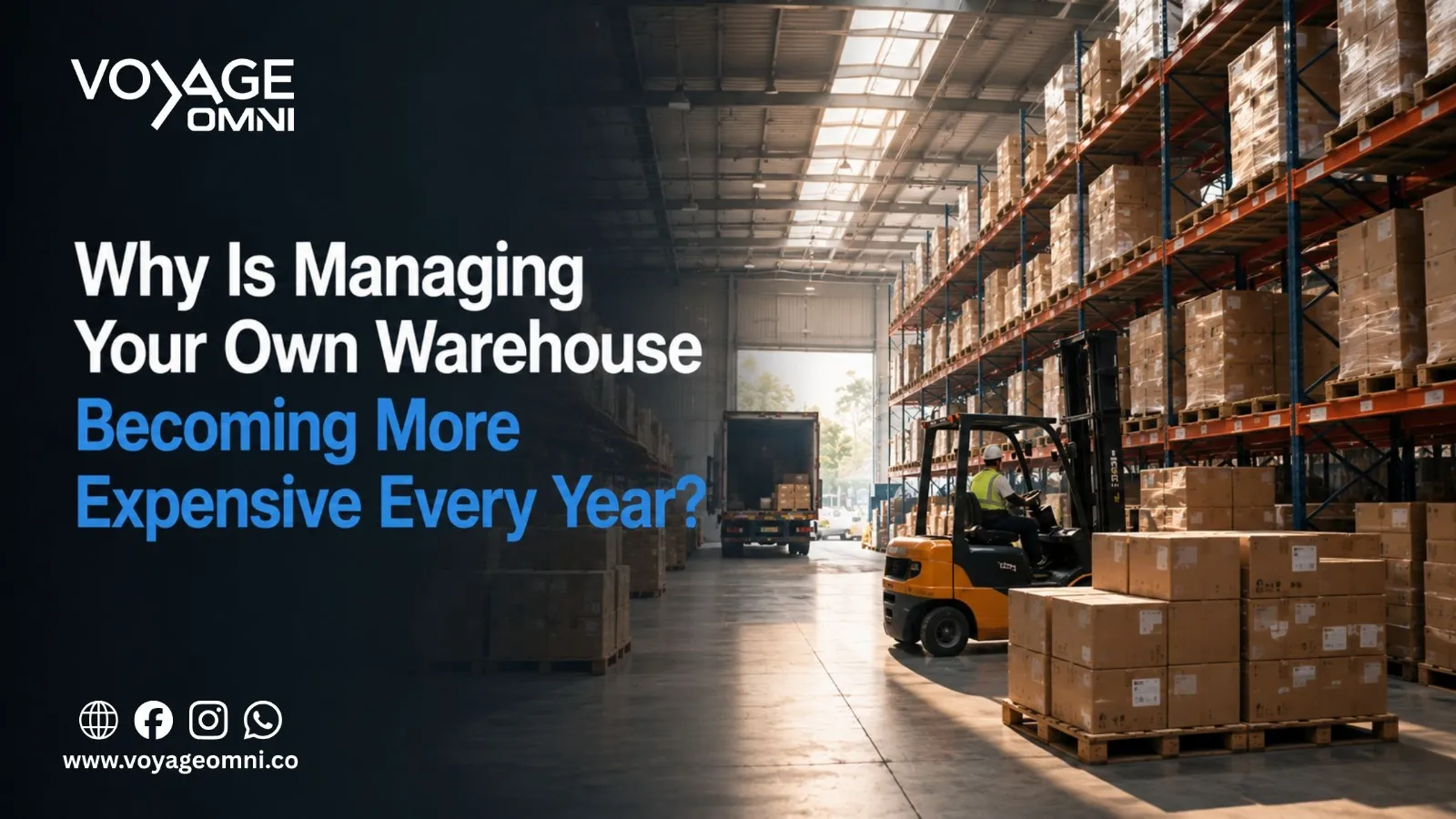
Why Is Managing Your Own Warehouse Becoming More Expensive Every Year?
Introduction
For a growing brand, having your own warehouse can seem like the right move. You have your own space, your own team & more control over your inventory.
But over time, warehouse management costs can become difficult to control. Rent is only one part of the expense. Staff salaries, electricity, equipment, security, maintenance & unused storage space can all add to the monthly cost.
As your business grows, these expenses often grow with it.
The Real Cost of Running a Warehouse
Many businesses calculate their warehouse budget based mainly on rent. In reality, running a warehouse comes with several additional expenses that contribute significantly to overall Warehousing Costs and Warehouse Management.
You may need warehouse staff, security, cleaning, electricity, internet, storage racks, forklifts & other handling equipment. These also require regular maintenance & replacement.
This means that even when your inventory levels are low, many of your warehouse costs remain the same.
Paying for Space You Don’t Always Need
One of the biggest challenges with traditional warehouse setups is unused space.
A brand may rent a large facility to prepare for future growth or seasonal demand. However, during slower periods, a significant portion of that space may remain empty while the business continues paying for it.
This can make Warehousing Costs much higher than they need to be, especially when businesses are also paying for Warehouse Services they may not always require.
Growth Can Increase Warehouse Costs
Business growth usually means more inventory. More inventory means more storage capacity, more handling & sometimes more staff.
Eventually, a warehouse that was suitable for your business may no longer be enough. Moving to a larger facility or expanding operations brings additional investment & higher operating costs.
As businesses expand their Warehouse Distribution networks, they may also need additional storage locations, handling capabilities & operational resources.
For brands with changing inventory levels, this can become a difficult cycle.
A More Flexible Approach to Warehousing
This is where flexible Warehousing Solutions and Smart Warehousing can make a difference.
Instead of managing every part of a warehouse operation yourself, brands can work with a professional warehousing partner & use storage, handling & other Warehouse Services according to their requirements.
This approach can help reduce the need for major investments in warehouse infrastructure & give businesses more flexibility when inventory levels change.
With Smart Warehousing, businesses can use professional infrastructure, storage capacity & operational support without carrying the full cost of maintaining a warehouse themselves.
The goal is simple: use the storage capacity and Warehouse Services you need without carrying the full cost of maintaining a warehouse yourself.
Conclusion
Managing your own warehouse can provide control, but it also comes with significant ongoing expenses. Rent, employees, equipment, utilities, maintenance & unused space can all increase your Warehousing Costs over time.
For growing brands, flexible Warehousing Solutions can provide a more practical way to manage storage, Warehouse Management & Warehouse Distribution while keeping costs more predictable.
The right warehousing solution is not always about having a bigger warehouse. It is about having the right capacity, Warehouse Services, technology & flexibility for your business.